
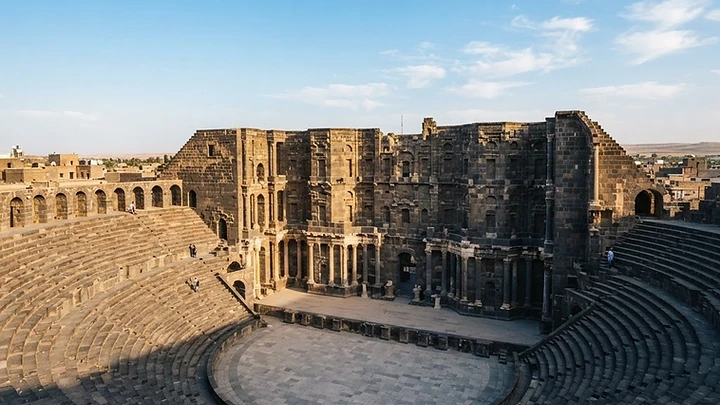
Daraa Governorate: Bosra & the Plains of Hauran
Geography and landscape
Daraa Governorate lies in southern Syria and forms a central part of the historic Hauran region, bordering Jordan to the south. Broad fertile plains dominate much of the landscape, while darker basalt terrain appears toward the east as part of the volcanic geography associated with Jabal al-Arab.
History
Hauran has a long history shaped by many civilizations. Bosra is the governorate’s most famous historic city, flourishing in Nabataean and Roman periods before remaining important in Byzantine and Islamic times. Caravan and pilgrimage routes through Hauran linked Damascus with the south for centuries.
What Daraa is known for
The governorate is famous for Bosra, its monumental Roman theatre and dark basalt architecture, as well as grain fields and traditional Hauran villages. The black stone gives many settlements a distinctive appearance.
Main places to visit
Bosra Old City and its Roman theatre are the main attractions, together with Daraa city, Hauran villages and the Muzayrib area when access allows. Stone houses, arches and traditional construction details reward slow exploration.
Tourism and activities
Allow a full day for Bosra, then consider shorter drives through rural Hauran. Architectural photography, local markets, countryside views and regional food are natural parts of the experience.
Hauran food
Southern Syrian cooking makes strong use of bulgur, wheat, yogurt and meat. Local versions of malihi and mansaf, freekeh, kibbeh, stuffed vegetables, yogurt dishes, grilled meat and tannour or saj bread are common. Dairy products, ghee and grains are important rural staples.
Climate
Summers are usually hot and dry, while winters are cooler and bring rainfall important for farming. Spring is especially attractive when the plains turn green.
Practical tips
Wear sturdy shoes on Bosra’s stone surfaces, check archaeological opening times and road conditions, and respect village privacy and farmland.
In summary
Daraa is the gateway to Hauran, combining fertile southern plains, Bosra’s exceptional archaeology, basalt architecture and a strong rural food culture.


