
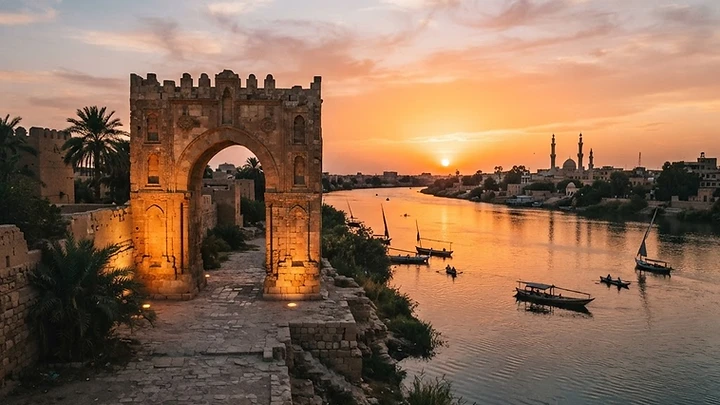
Raqqa Governorate: Euphrates, Baghdad Gate & Lake Assad
Geography and landscape
Raqqa Governorate lies in northeastern-central Syria and is crossed by the Euphrates, the region’s key natural and agricultural feature. Farmland follows the river valley, while drier steppe extends beyond it. Lake Assad creates a broad water landscape in the western part of the governorate.
History
Raqqa has ancient roots and became especially important during the early Islamic period. It flourished under the Abbasids and served for a time as a major political and administrative center. The Baghdad Gate, Qasr al-Banat and remains of city walls recall that era.
What Raqqa is known for
The Euphrates, Baghdad Gate, historic remains, Lake Assad and Ja'bar Castle are the governorate’s best-known features. Irrigated agriculture, wheat, cotton and eastern Syrian hospitality also shape local identity.
Main places to visit
Key sites include Baghdad Gate, Qasr al-Banat, remains of old fortifications, Lake Assad and Ja'bar Castle. Other archaeological tells exist across the region, but access depends on current local conditions.
Tourism and activities
When access allows, visitors can explore old-city remains, walk near the Euphrates, photograph river agriculture and visit the lake and castle area. Sunset over the river or lake can be especially striking, while local markets offer a window into everyday life.
Local food
Raqqa’s cuisine reflects the Euphrates and steppe: rice, bulgur, lamb, kabsa-style dishes, tharid, kibbeh, grilled meat and traditional bread are common. River fish is eaten in some areas, while Arabic coffee and dates are closely tied to hospitality.
Climate
Summers are hot and dry; winters are cooler and open areas can be windy. Spring and autumn are more comfortable, and the river corridor is visibly greener than the surrounding steppe.
Practical tips
Plan distances, fuel, water and transport carefully. Check current access conditions and local instructions before travelling outside populated areas.
In summary
Raqqa is a Euphrates governorate shaped by Abbasid history, river agriculture, Lake Assad and a distinctive eastern Syrian culture.


